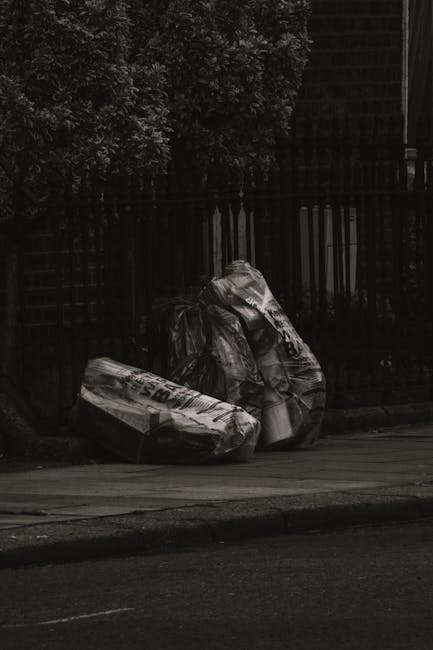
Sanderstead fly-tipping laws and Croydon Council penalties: a practical guide for residents, landlords and local businesses
If you live, work, or manage property in Sanderstead, fly-tipping is one of those problems that can turn from annoying to expensive very quickly. A dumped mattress by a hedge, a pile of builders' rubble at the end of a lane, or a van load of broken office furniture left beside a wall can trigger complaints, clean-up costs, and enforcement action. This guide explains Sanderstead fly-tipping laws and Croydon Council penalties in plain English, so you can understand what counts as illegal dumping, what the council may do, and how to stay on the right side of the rules.
We'll also cover the practical side of avoiding trouble: what evidence matters, what to do if waste has been dumped on your land, and how responsible removal arrangements can help you steer clear of fines in the first place. Truth be told, most people don't set out to break the law; they just make a rushed decision on a Saturday morning. That's usually where the headache starts.
Why Sanderstead fly-tipping laws and Croydon Council penalties matter
Fly-tipping is not just an eyesore. It can create safety risks, block access, attract pests, and lead to costly clean-up work. In a place like Sanderstead, where streets, side roads, shared drives and boundary edges can be tight, dumped waste can be noticed fast and reported just as quickly. A few black bags or a half-demolished shed panel may look minor to one person, but to enforcement teams it can still be evidence of unlawful disposal.
What matters most is this: if waste is placed somewhere without permission, or given to someone unlicensed who then dumps it, you can still end up in trouble. Many people are surprised by that. They assume the person who physically dumped the waste is always the only one responsible. Not quite. Responsibility can extend further depending on the facts, which is why records and common sense both matter.
For households, the risk is mainly accidental non-compliance. For landlords, letting agents and business owners, the risk can be reputational as well as financial. A complaint about fly-tipping outside a property can become a repeat issue, especially where tenants, contractors or cleaners are moving items in and out. If you regularly manage bulky waste, it is worth having a proper disposal route in place, such as reliable waste removal support or a service suited to the type of material involved.
There is also a wider local benefit. Cleaner streets are easier to maintain, feel safer, and send a clear message that dumping waste is not tolerated. That sounds simple, but it really does influence behaviour. One abandoned sofa often leads to another. People notice. Unfortunately, so do the squirrels.
How Sanderstead fly-tipping laws and Croydon Council penalties works
At a practical level, fly-tipping enforcement usually begins with a report, a sighting by council officers, or evidence found near the waste. Croydon Council may investigate who deposited the waste, who arranged the collection, and whether any duty of care was breached. The exact process can vary, but the logic is broadly the same: determine what was dumped, where it was left, and who had responsibility for it.
There are a few common pathways:
- Direct dumping: someone leaves waste on land without permission.
- Illegal transfer: waste is handed to someone who does not deal with it properly.
- Negligent disposal: waste is left in a way that causes it to escape, spill, or be abandoned.
- Business non-compliance: a company fails to keep evidence of lawful disposal or uses the wrong collection route.
Croydon Council penalties can include fixed penalties for certain offences and more serious action where the circumstances justify it. The council may also arrange removal of dumped waste from public land, and where appropriate recover costs. In some cases, prosecution can follow. The exact sanction depends on the type of waste, the scale of the incident, whether there is repeat offending, and whether the case involves a household or commercial operator.
For readers trying to work out where they stand, a useful way to think about it is this: if you can show that your waste was handled responsibly, by the right people, with clear records, you are in a much stronger position. If you cannot explain who collected it, where it went, or why it ended up where it did, that is where problems begin.
And yes, councils do look at paper trails. Receipts, job sheets, photos, transfer notes, and contractor details can all matter. A tidy folder may not sound exciting, but it can save a lot of stress later.
Key benefits and practical advantages
Following the rules is not just about avoiding a penalty. There are real, practical benefits to handling waste properly in Sanderstead.
- Lower financial risk: fewer fines, fewer recovery costs, fewer surprise bills.
- Better proof of compliance: useful if a neighbour complains or an officer asks questions.
- Cleaner premises: especially important for landlords, retail premises, offices and shared buildings.
- Faster clearances: a planned removal is usually easier than dealing with a last-minute pile-up.
- Better reputation: people notice when a property or business keeps its surroundings tidy.
There is a quieter advantage too. Good waste management reduces friction. Staff don't have to argue about what to do with old desks, broken chairs or renovation offcuts. Households do not need to store a growing mound of unwanted items in the hallway. It just makes life simpler, and to be fair that matters more than people admit.
If you are dealing with bulky household waste, mixed items after a move, or clearance work after refurbishment, looking at specific services like home clearance, house clearance, or office clearance can help you match the job to the right disposal method.
Who this is for and when it makes sense
This topic is relevant to more people than you might think. It is not just for business owners or landlords. Anyone who generates waste, arranges a collection, or inherits dumped material can be affected.
Homeowners and tenants
If you are clearing out a loft, garage, spare room or garden, you may end up with bulky waste quickly. A small error, such as leaving bags next to overflowing bins or giving items to the first cheap van that knocks on the door, can create problems. If you have awkward items to shift, a targeted service such as loft clearance, garage clearance, or garden clearance may be the cleaner option.
Landlords and letting agents
Landlords often need to clear abandoned items after a tenancy, and that is where confusion sets in. Who owned the waste? Who arranged collection? Was the contractor legitimate? If you are holding keys to a property and discovering dumped items at the front or back, you need a calm process and records, not guesswork.
Builders and tradespeople
Builders' waste is one of the most common flashpoints. Rubble, timber offcuts, plasterboard, broken fixtures, packaging, and old fittings all need proper handling. If you are in the middle of a refurbishment, a dedicated builders waste clearance service can reduce the risk of waste being left on site or tipped elsewhere.
Businesses and office managers
Offices, shops and small commercial premises can accumulate old furniture, packaging, electronics, and archive material. Business waste needs clear responsibility. A structured approach such as business waste removal is often easier than trying to improvise collections ad hoc. Better safe than sorry, as they say, and in this case it's not just a saying.
Step-by-step guidance
If you want to avoid fly-tipping problems, a simple process helps. You do not need to make it complicated.
- Identify the waste type. Separate household rubbish, recyclable items, bulky furniture, garden waste, renovation debris and anything hazardous.
- Check what the waste should not do. It should not be left on land without permission, handed to an unknown collector, or mixed in with items that need special handling.
- Choose a lawful collection route. Use a credible service that can handle the material you have, whether that is furniture clearance or furniture disposal.
- Keep evidence. Save quotes, confirmations, job notes, and any photos of the items before collection.
- Ask where the waste goes. You do not need a lecture, but you do need enough detail to know it is being managed properly.
- Inspect the area after collection. Make sure nothing has been left behind in the road, alley or shared access.
- Respond quickly if dumped waste appears. Photograph it, record the time, and report it through the proper channel for the location involved.
That's the basic flow. Simple. Sensible. A bit unglamorous, but it works.
If you are comparing disposal options, it can also help to review practical details on pricing and quotes so you understand how professional clearance is usually structured before you commit.
Expert tips for better results
After dealing with waste issues for long enough, a few patterns become obvious.
First, document before you move anything. If waste is already dumped on your land, take clear photos from different angles before shifting it. That matters for reports and for protecting yourself if there is a dispute about where it came from.
Second, avoid verbal-only arrangements. A quick "mate of a mate" collection sounds convenient at 9am and painful by noon if the items reappear in a lane nearby. Ask for written confirmation or at least a clear record of the arrangement.
Third, think about the awkward stuff early. Old furniture, broken sheds, mixed garden waste, and office clearances all create different disposal needs. If you wait until the last minute, people tend to cut corners. That is when fly-tipping risks climb.
Fourth, separate reusable items where possible. Not everything has to go to waste. Items in usable condition can sometimes be diverted before the rest is removed. That can be cleaner, cheaper, and frankly less wasteful.
Fifth, use policies internally. Businesses should have a simple waste process, even if it is only one page. Who books clearance? Who signs off? Where are records stored? Small rules prevent messy outcomes.
If sustainability matters to you, it is worth reading more about recycling and sustainability. It gives the waste conversation a bit more context than "get rid of it quickly", which is where people often start and stop.
Common mistakes to avoid
Here are the mistakes that cause most headaches.
- Assuming the cheapest collection is the safest. Cheap can be fine, but if the collector disappears, so does your protection.
- Leaving waste outside "for later". If it is on land without proper permission or storage, that can still be a problem.
- Mixing business and household waste carelessly. The route for one is not always suitable for the other.
- Ignoring dumped waste on your own land. It may not be your fault, but it still needs prompt handling.
- Throwing away records too soon. Keep them longer than you think you need to. Then keep them a bit longer again.
- Not checking access and loading conditions. A collection that cannot get out cleanly may leave part of the waste behind.
One small but common slip: people trust the phone number on a van or flyer and assume that means the operator is legitimate. Not necessarily. A vehicle can look tidy and still be completely the wrong choice. The surface can be deceiving, let's say that plainly.
Tools, resources and recommendations
You do not need a big toolkit, but a few simple things make life easier:
- Phone camera: for time-stamped photos before and after collection.
- Basic file storage: keep invoices, messages and job confirmations in one place.
- Waste separation bags or boxes: useful for sorting items before removal day.
- Simple inventory list: especially helpful for bulky items or office clear-outs.
- Access notes: gates, alley widths, parking considerations, entry codes, or shared access arrangements.
For people clearing out homes, garages, lofts or gardens, service-specific pages can help you plan what type of removal is actually needed. For example, flat clearance can be useful where access is tight, while garage clearance or garden clearance may suit mixed, bulky waste. A lot of the stress comes from trying to use the wrong solution for the wrong pile.
Also keep a note of the complaints process and service terms if you are using a clearance provider. In a messy situation, it helps to know who handles issues and how. The pages for complaints procedure and terms and conditions can be practical reference points before you book anything.
Law, compliance, standards and best practice
This section is where the legal side needs careful wording. Fly-tipping laws and council penalties can vary in their exact application depending on the offence, the evidence, and whether the case involves a person, business, or contractor. So rather than overstate the detail, the safest summary is this: waste should be transferred, stored and disposed of lawfully, with enough record-keeping to show what happened.
In everyday terms, good compliance usually means:
- using a legitimate collection route
- keeping evidence of transfer or disposal
- not abandoning waste on public or private land without permission
- checking that anyone you pay to remove waste is appropriate for the job
- avoiding mixed loads where the contents are uncertain or poorly handled
For businesses, compliance is especially important because repeated mistakes can suggest a wider systems failure rather than a one-off lapse. If you manage an office or commercial site, having a stable process for office clearance and broader business waste removal helps demonstrate that you take duty of care seriously.
Best practice also extends to safety. Waste piles can hide broken glass, nails, mouldy materials, or awkward lifting hazards. That is where a provider's health and safety policy and insurance and safety information become relevant. If the job is messy, you want everyone protected. No drama, just solid practice.
Options, methods and comparison table
There is more than one way to deal with unwanted waste, but not all methods are equally safe, convenient or defensible if questions arise later.
| Option | Best for | Pros | Watch-outs |
|---|---|---|---|
| Leave it out for collection later | Very small, ordinary bin waste | Cheap and simple | Can become untidy, attract complaints, or be treated as abandonment if handled badly |
| Use a general clearance service | Mixed household items, furniture, garages, lofts | Convenient, usually efficient | Needs clear scope and proper records |
| Use a specialist waste route | Builders' waste, office items, business waste | Better fit for heavier or more frequent jobs | Must match the waste type and access conditions |
| DIY transport to a legal facility | Small loads and confident householders | Direct control over the process | Time-consuming, physically demanding, and easy to get wrong if sorting is poor |
For many local readers, the middle option is the sweet spot. It avoids the risk of casual dumping while saving you from wrestling with a boot full of heavy items on a wet morning. Nobody really wants that.
Case study or real-world example
Imagine a small property near a residential street in Sanderstead. A rear garden has accumulated broken fence panels, an old sofa, a couple of sacks of soil, and some renovation offcuts. The owner is busy, the space is awkward, and the temptation is to leave everything neatly stacked at the side gate until someone "can sort it out".
That is where trouble starts. If the waste is left in a way that looks abandoned, neighbours may complain. If a neighbour sees someone unknown move it later, nobody is certain who did what. And if the owner hires a van without checking how the waste will be handled, there may be no useful record if the material is later found dumped elsewhere.
A better approach would be:
- photograph the waste before moving it
- separate reusable items from true waste
- book a proper clearance for bulky items and mixed waste
- keep the booking confirmation and receipt
- check the area after collection
The result is usually less stress, a cleaner property, and much less risk of being drawn into a fly-tipping complaint that was never intended in the first place. Simple, but it saves arguments.
Practical checklist
Use this checklist before arranging disposal or responding to dumped waste.
- Have I identified exactly what the waste is?
- Do I know whether any items need specialist handling?
- Have I chosen a lawful way to remove it?
- Do I have written records or photos?
- Have I checked access, parking and loading conditions?
- Have I separated reusable, recyclable and general waste where possible?
- Do I know who to contact if something goes wrong?
- Have I confirmed the area is left clear after collection?
- If waste was dumped on my land, have I documented it before moving it?
- Have I kept the paperwork somewhere I can actually find it later?
If you can tick most of those boxes, you are already ahead of a lot of people. That is the honest truth.
Get a free quote today and see how much you can save.
Conclusion
Sanderstead fly-tipping laws and Croydon Council penalties matter because waste issues rarely stay small for long. A dumped item can become a complaint, a clean-up job, an investigation, or a fine. The good news is that most of the risk is avoidable with straightforward habits: use the right disposal route, keep records, and do not leave waste sitting around where it can be misread or misused.
If you are dealing with a one-off household clear-out, a garden job, or a larger commercial load, the safest route is usually the most organised one. A little planning goes a long way, and frankly it feels better too. Cleaner space, fewer surprises, less noise in the background.
And once the waste is gone, the whole place tends to feel lighter. That bit never really gets old.
Frequently Asked Questions
What counts as fly-tipping in Sanderstead?
Fly-tipping is the illegal dumping of waste on land without permission. That can include anything from black bags and furniture to builders' rubble or mixed household items left in the wrong place.
Can I be fined if someone else dumps waste from my property?
Potentially, yes, depending on the facts. If you arranged the collection carelessly or handed waste to the wrong person, you could still face questions. Keeping records is the safest habit.
What penalties can Croydon Council use for fly-tipping?
Penalties can include fixed penalties, removal costs, and in more serious cases prosecution. The exact response depends on the waste, the circumstances, and the evidence available.
What should I do if rubbish is dumped on my land?
Photograph it first, note the date and time, and avoid moving it until you have recorded the condition. Then arrange removal through a proper route and keep your evidence.
Is putting rubbish beside a bin the same as fly-tipping?
It can be, if the waste is left somewhere it should not be or in a way that amounts to abandonment. The context matters, but "out of sight" is not the same as "properly disposed of".
Do I need proof that my waste was collected legally?
Yes, having proof is very sensible. Receipts, booking notes and before-and-after photos can help if anyone later asks where the waste went.
How can businesses reduce fly-tipping risk?
Have a written waste process, use a reliable collection route, train staff on what to do with bulky items, and keep records of every clearance.
What is the safest way to get rid of old furniture?
Use a proper furniture clearance or disposal route rather than leaving items outside or using an unknown collector. Furniture is bulky, awkward and easy to mishandle.
Are builders' offcuts treated differently from household waste?
Often, yes, in practical terms. Builders' waste can be heavier, messier and more likely to need a dedicated collection route, which is why clear planning matters.
Can a landlord be responsible for fly-tipping by a tenant?
Sometimes the landlord may still need to deal with the waste issue, especially if it is on their land. Responsibility for the offence itself depends on who arranged or carried out the dumping.
What records should I keep after waste removal?
Keep confirmations, receipts, job details, photos if relevant, and any communication about what was collected. It sounds dull, but it can be very useful later.
Is it better to book a specialist waste service or a general clearance service?
It depends on the job. General clearance suits mixed household or furniture items, while more specific waste types may need a more tailored approach. Matching the service to the waste is usually the key.
Where can I learn more about how a clearance company works?
Reading the company's about us, terms and conditions, payment and security, and recycling and sustainability pages can give you a better feel for how they operate and what standards they follow.